


Share with your CIO
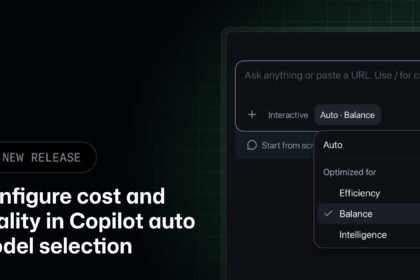
Microsoft is betting that consolidation beats proliferation. The company has relaunched Copilot as a unified enterprise AI platform, collapsing previously scattered tools into a single destination covering conversational AI, autonomous long-running tasks, and coding assistance. Users can now launch Word and Excel directly from Copilot, positioning it as a genuine work hub rather than a feature. Pricing comes in two tiers: a per-seat subscription with a token ceiling and a usage-based pay-as-you-go option for power users. Microsoft’s cloud revenue is already reflecting AI adoption, though the company no longer breaks out AI figures separately.
What this means for your business
The per-seat versus pay-as-you-go structure is the real decision point. If your organization is still in experimental mode, the per-seat cap is a known cost ceiling, which your finance team will prefer. But any team running autonomous, multi-step AI workflows, think supply chain analysis or automated contract review, will burn through token limits fast. Signing the wrong tier at rollout means either throttled productivity or a renegotiation before year-end.
The consolidation into a single platform solves a real adoption problem that Microsoft created itself. Copilot existed in Teams, in Word, in Azure, in GitHub, and as a standalone consumer app, and most enterprise users simply didn’t know which version to use for what. Tool proliferation is the silent killer of AI adoption rates inside large organizations. Unified entry points lower the cognitive overhead on end users, which historically moves actual usage numbers more than any feature release. Microsoft is fixing an organizational friction problem, not just a product one.
The signal worth watching: Microsoft stopped reporting AI revenue as a separate line because it’s now distributed across cloud, productivity, and developer segments. That accounting change is a tell. It means AI is no longer a pilot add-on but infrastructure cost embedded in every workload. Your next negotiation with Microsoft shouldn’t be about Copilot licensing in isolation. It should be about total AI consumption across Azure, M365, and GitHub Copilot combined, because that’s how Microsoft is now pricing the relationship.
Concept deep-dive: Token limits in enterprise AI subscriptions
A token is the basic unit AI models use to process text, roughly three-quarters of a word. Token limits cap how much AI processing a user can consume per billing cycle. Per-seat plans set that ceiling per user; pay-as-you-go charges per token consumed above a baseline. Think of it like a data plan: most users never hit the cap, but anyone streaming video all day will. In enterprise terms, a legal analyst running daily document reviews exhausts tokens far faster than a sales rep who occasionally drafts emails. Matching tier to actual workflow intensity is where CIOs either save or waste budget.
Based on reporting from Microsoft (NASDAQ: MSFT) Consolidates Copilot Into Single Enterprise AI Platform With Flexible Pricing, originally published 2026-09-26 20:55:00.