


Share with your CIO
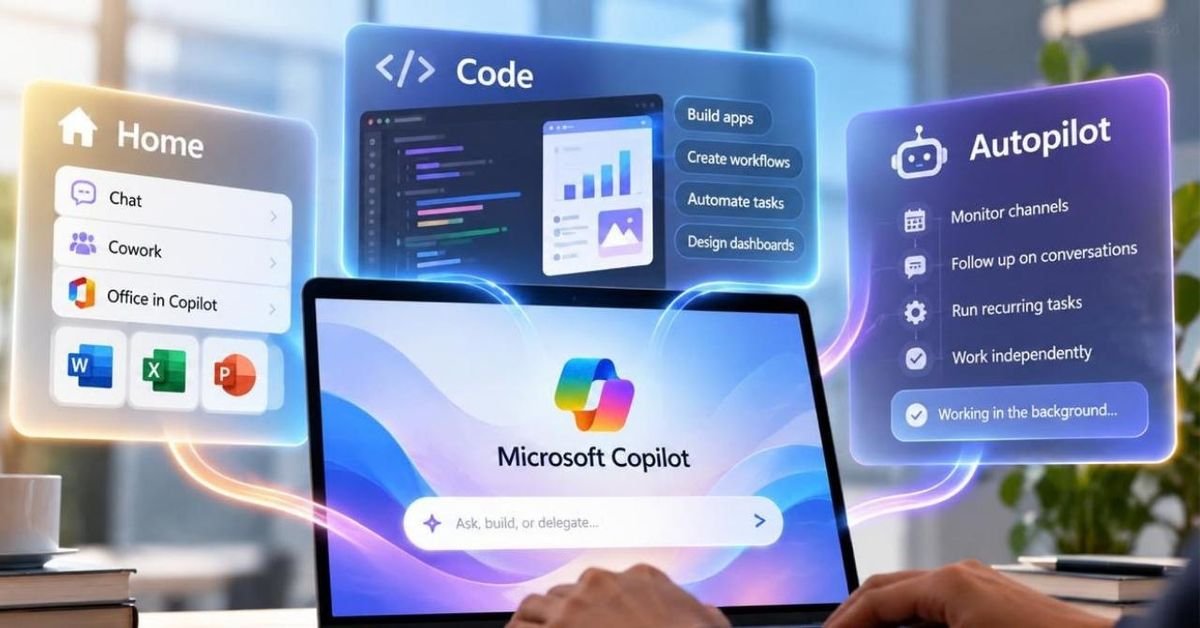
Microsoft is repositioning Copilot from a prompt-response assistant into a persistent work layer across its enterprise ecosystem. The new Copilot architecture introduces three distinct modes: Home for consolidated task management, Code for natural-language application creation, and Autopilot for persistent agents that continue executing work autonomously after the initial instruction. Microsoft IQ provides enterprise context by pulling from Fabric, Dynamics 365, and Power Platform. Usage-based billing applies to agentic workloads, with FinOps controls arriving to manage that spend. The October private preview of “Today” extends this toward proactive task preparation across email, calendar, and Teams.
What this means for your business
The shift that matters here isn’t Copilot adding features. It’s Microsoft betting that the unit of AI value is no longer the completed task but the delegated process. When Autopilot can monitor a supplier review, schedule stakeholder meetings, and follow up on open items over several days, you’re not buying a faster typist. You’re handing over a slice of an operational workflow, with all the governance risk that implies.
The Managed Runtime announcement is the part most CIOs will underestimate. When potentially thousands of employees can generate internal applications through natural language, the shadow IT problem doesn’t get smaller. It gets faster. Microsoft’s answer is to route those applications through tenant-controlled hosting with IT governance intact. That’s the right architecture on paper, but the recurring failure mode in these rollouts is that adoption outruns the governance tooling by six to twelve months. The approval workflows and plugin registries need to be in place before Code goes wide, not after the first compliance incident.
The signal worth watching: usage-based billing for agentic workloads means your Copilot spend will stop being predictable the moment Autopilot adoption scales. Cloud infrastructure teams spent years learning to govern AWS and Azure consumption through FinOps disciplines. AI agent consumption will require the same rigor, and most enterprises aren’t there yet. I’d revise this view if Microsoft’s FinOps controls prove granular enough to allow department-level budget caps before Autopilot exits preview.
Concept deep-dive: Persistent agents
A persistent agent is an AI process that maintains state and continues executing across time without waiting for a new user prompt. Unlike a chatbot that answers and stops, a persistent agent holds a goal, monitors relevant inputs like emails or channel messages, and takes follow-up actions autonomously. Think of it as the difference between asking an employee one question versus assigning them a project. The business connection is direct: persistent agents make partial process delegation possible, but they also mean an AI system is acting on your behalf when you aren’t watching.
Based on reporting from Microsoft turns Copilot from AI assistant to enterprise work layer, originally published 2026-09-28 02:42:00.