

Share with your CTO
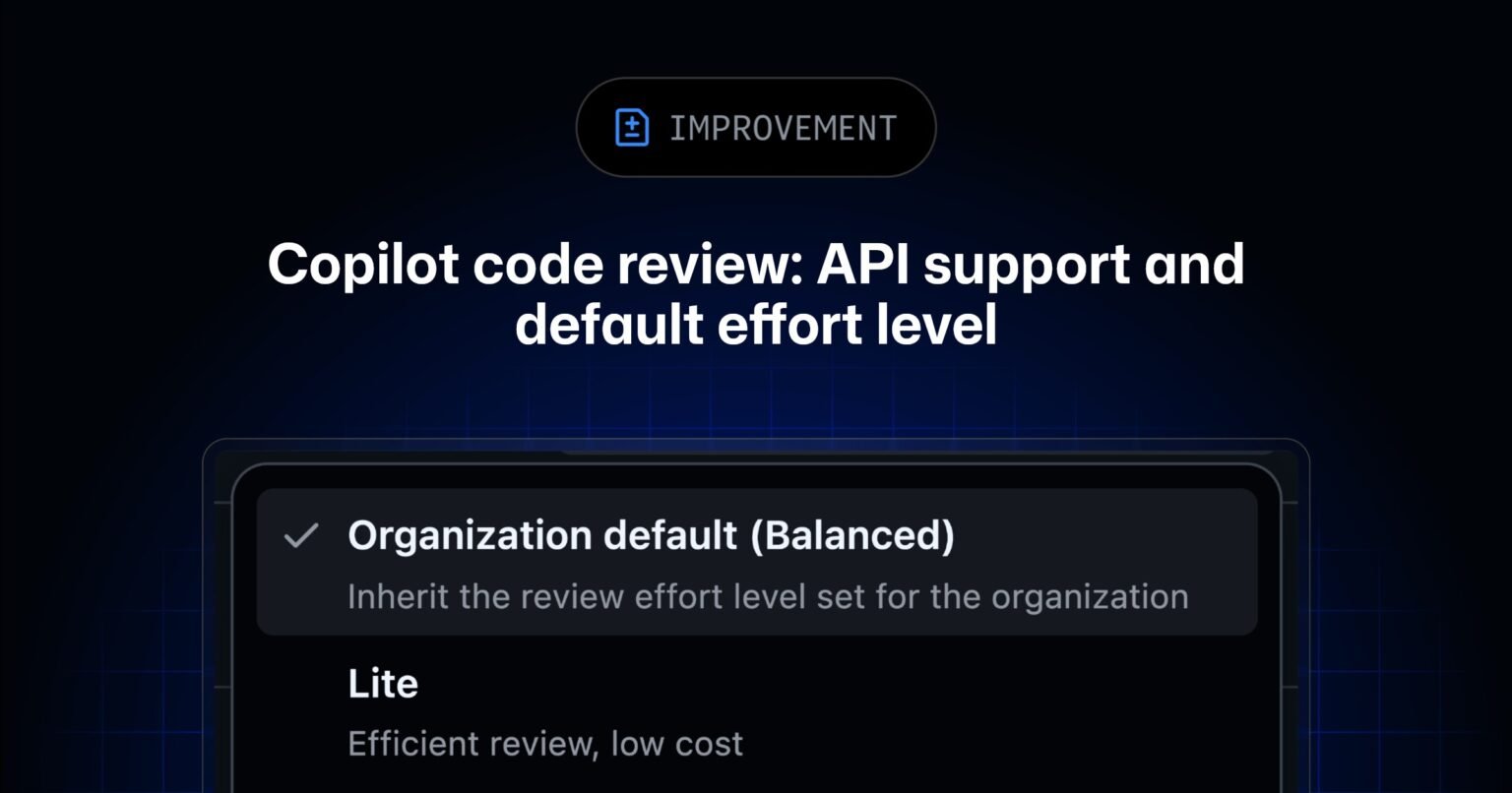
GitHub is pushing Copilot code review deeper into the engineering workflow fabric. The company has opened Copilot code review via REST and GraphQL APIs, letting teams trigger AI-powered reviews from external scripts, CI pipelines, and internal tooling rather than only from the GitHub UI. Simultaneously, the default review effort level shifted from Lite to Balanced on September 28, 2026, across all Copilot Pro, Pro+, Max, Business, and Enterprise plans. Configuration can be overridden at the enterprise, organization, repository, or personal level.
What this means for your business
API access is the real move here, not the effort-level default. Copilot code review was previously a GitHub-native gesture, useful but isolated. Opening it to REST and GraphQL means engineering teams can wire it into existing CI/CD pipelines, internal developer portals, or Slack-triggered workflows. A team running Jenkins or CircleCI can now call a Copilot review as a pipeline step, without requiring developers to ever open a GitHub pull request view.
The Balanced default is a deliberate nudge upward in AI involvement across the installed base. Anyone who never touched the setting now gets more thorough review passes automatically. That’s a reasonable default for most enterprise codebases, but it carries a real cost implication: Balanced consumes more compute than Lite, and at Copilot Enterprise pricing, volume matters. Engineering leaders who haven’t audited their repository-level settings are now paying for more thoroughness whether they intended to or not. That’s not inherently wrong, but it should be an explicit choice.
The signal worth watching is how quickly internal developer platform teams absorb this API surface. The same playbook ran with Dependabot and code scanning: GitHub adds a capability, it gets adopted ad hoc, then platform engineering teams standardize it into the golden path. When that consolidation happens here, Copilot code review becomes a compliance artifact as much as a quality tool. Security and audit teams will eventually ask what the review logs show. CTO organizations that instrument this early will have cleaner answers.
Concept deep-dive: Review effort level
A review effort level controls how deeply an AI code review model analyzes a pull request before returning feedback. Lite performs fast, surface-level checks, catching obvious bugs and style issues with low latency. Balanced runs a more thorough analysis, examining logic paths, edge cases, and dependency interactions. Think of it like spell-check versus a full editorial pass. The business connection is real: higher effort means longer review times and higher compute consumption, which matters when thousands of pull requests run daily across a large engineering organization.
Based on reporting from Copilot code review: API support and new default effort level, originally published 2026-10-02 15:13:00.