

Share with your CTO
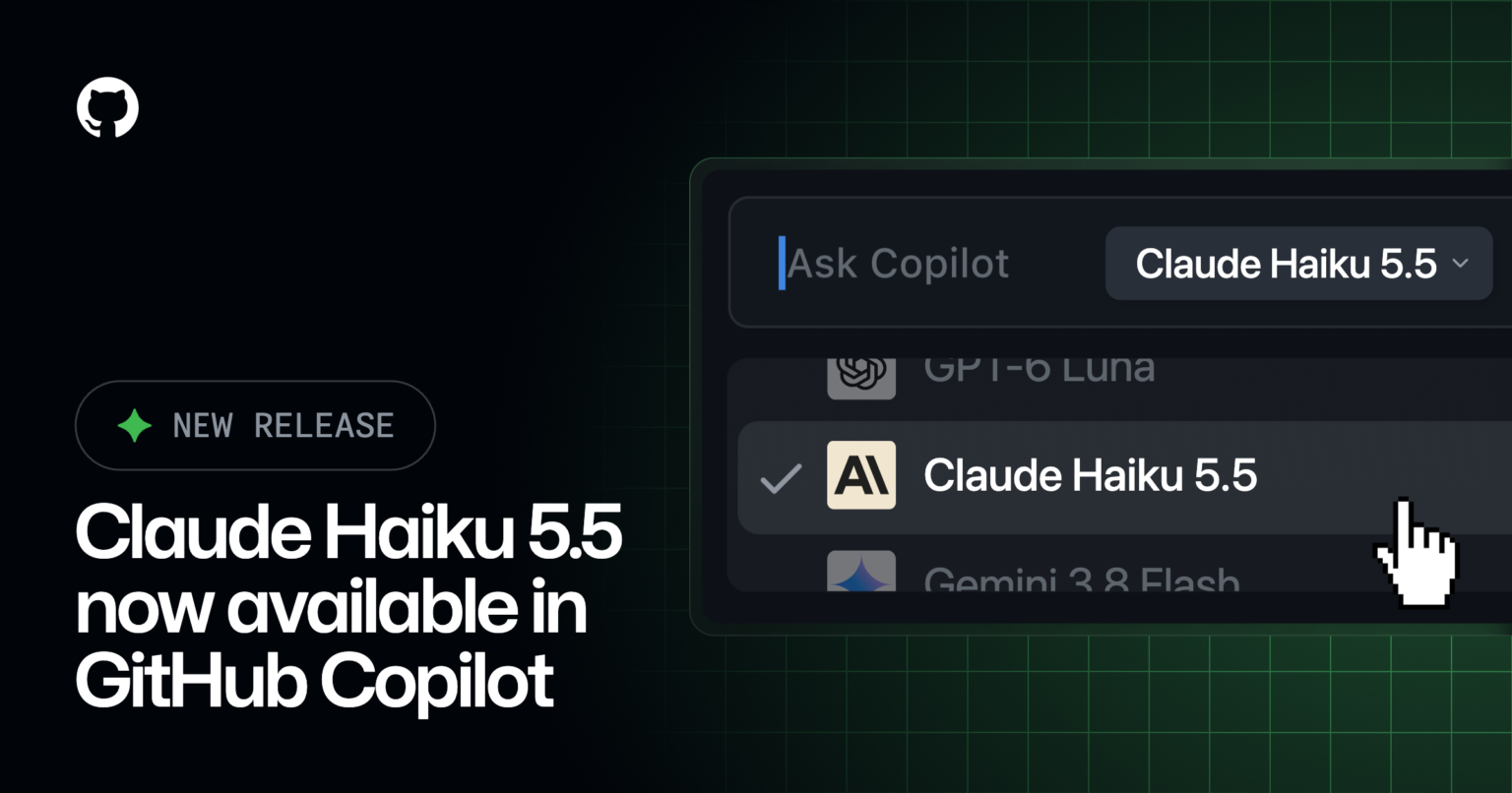
GitHub is positioning Claude Haiku 5.5, Anthropic’s latest lightweight model, as the workhorse engine inside GitHub Copilot’s agentic coding workflows. Available now across every major Copilot tier, from Pro through Enterprise, Haiku 5.5 targets subagents, quick edits, and terminal tasks. The headline claim: in early testing it matched Claude Sonnet 5 on many coding tasks while consuming significantly fewer tokens and steps. It bills at provider list pricing under usage-based billing, meaning costs scale directly with consumption volume.
What this means for your business
The “matched Sonnet 5 on many coding tasks” framing is doing a lot of work here. If that claim holds at production scale, it means your engineering teams get Sonnet-grade output on routine tasks at Haiku-grade cost. For any org running Copilot agents across hundreds of developers, that token efficiency compounds fast. The practical test: track your usage-based billing closely in the first 60 days.
The deeper architectural signal is that GitHub is building a tiered model stack inside Copilot, where a cheaper, faster model handles high-volume background work and heavier models handle complex reasoning. This is the same “router” pattern that’s emerging across enterprise AI platforms. You don’t pick one model anymore. You design workflows that route tasks to the right model by cost and latency. Most engineering orgs haven’t operationalized that yet, and Copilot is quietly making the decision for them by default.
The question worth holding: GitHub’s default-on policy for new models means Haiku 5.5 is live in your Enterprise environment unless an admin explicitly blocked it. That’s a governance posture worth auditing. The signal worth watching is whether Anthropic’s lightweight model line continues closing the gap on its own midrange tier, because if Haiku keeps matching Sonnet on coding benchmarks, the midrange product category starts looking thin.
Concept deep-dive: Subagents
A subagent is a smaller AI process that executes a specific, bounded task inside a larger automated workflow, rather than handling the full job end to end. It exists because large language models are expensive to run at scale, and most steps in a multi-step coding task don’t need maximum capability. Think of it like a sous chef who preps ingredients while the head chef focuses on execution. In Copilot’s architecture, Haiku 5.5 is designed to be that subagent, running fast and cheap so that your developers’ attention and your billing budget stay focused where complexity actually lives.
Based on reporting from Claude Haiku 5.5 in GitHub Copilot, originally published 2026-10-07 16:12:00.