
Share with your CTO
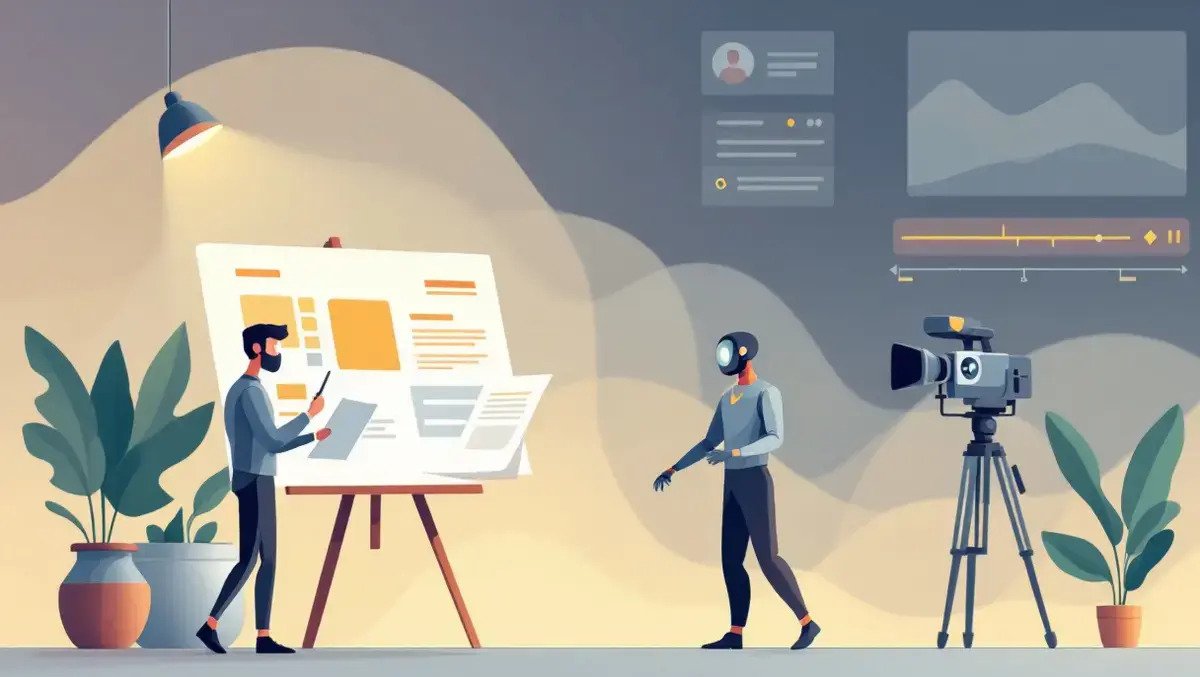
Google ran a structured internal experiment to find out whether multi-agent systems could execute a complex creative workflow without direct human management. Ten three-agent crews, each filling distinct roles, produced more than 25 short films totaling 44 minutes inside Scion, Google’s open-source multi-agent orchestration platform. The stack combined Veo 3.1 for video, Gemini image generation, Lyria 3 for music, and Gemini Flash TTS for voice. A four-minute film required over 40 image generations, 25-plus video clips, and hundreds of assembly operations.
What this means for your business
The organizations this story is squarely about are the ones already running pilot multi-agent deployments and wondering whether the architecture generalizes beyond code generation and data pipelines. If your current agent work is confined to software tasks, Google’s experiment is a direct data point on what breaks when you extend the pattern to longer, messier, stateful workflows, and the failure modes are instructive before you hit them in production.
The single most operationally useful finding has nothing to do with film. Agents that persisted decisions to shared files survived crashes and resumed work cleanly; agents that held state only in message threads lost it when anything failed. That’s a design constraint with immediate implications for any multi-agent architecture running tasks longer than a single session. The recurring failure mode in agentic systems is statelessness masquerading as continuity, and Google’s data here is unusually concrete: an Editor crashed mid-assembly, the Technical Lead read the Editor’s written timeline plan, and the job completed. That’s not a demo, it’s a recovery pattern your infrastructure team should be encoding as a requirement now.
Google also learned that prompt specificity changes output quality in ways that compound across a pipeline. General instructions produced generic results; tight constraints on colors, instruments, and excluded visual artifacts produced distinct ones. In a multi-step pipeline where each agent’s output becomes the next agent’s input, vague prompting at step two doesn’t just degrade step two’s output, it degrades every downstream step. The teams that picked constrained visual styles like claymation worked around generative video’s known weaknesses rather than fighting them. That’s a workflow design instinct, not a model capability, and it transfers directly to enterprise automation pipelines built on today’s models.
The coach agent’s line, “a room full of specialists who can each do one thing at superhuman speed, but none of them can taste the soup,” is the most honest summary of where multi-agent orchestration actually sits in 2025. Coordination intelligence is the scarce resource, not generation capability. The budget call this reframes isn’t whether to invest in generative models; it’s how much of your agent architecture spend is going toward orchestration, state management, and inter-agent handoff logic versus raw model access. If the ratio skews heavily toward model spend, you’re optimizing the wrong layer.
Concept deep-dive: Multi-agent orchestration
Multi-agent orchestration is the practice of coordinating multiple specialized AI agents, each handling a distinct task, so they operate as a coherent workflow rather than isolated tools. Think of it as a project management layer for AI: one agent writes, another reviews, a coordinator schedules, and a supervisor checks quality gates. It exists because no single model handles every step of a complex task reliably. The business connection is direct: orchestration quality, not model quality, determines whether agentic workflows succeed at production scale.
Based on reporting from Google tests AI agents on short film-making project, originally published 2026-07-16 22:30:00.