
Share with your CFO
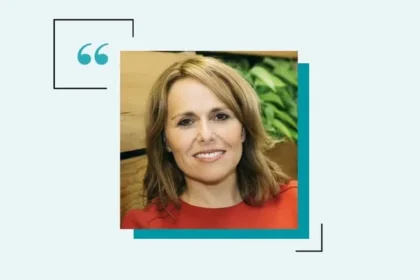
OpenAI CFO Sarah Friar published a framework she calls a scorecard for measuring AI’s economic worth, built around a single question: does the value of work AI completes grow faster than the cost of producing it? The four-step method asks companies to define completion, calculate full task cost, track dependability (quality hits, human edits, human takeovers), and monitor trends over time. The framework introduces “useful intelligence per dollar” as the governing metric, a cost-per-successful-outcome measure rather than a cost-per-token comparison. Friar is simultaneously absorbing expanded business responsibilities after president-level executive Fidji Simo shifted to a part-time advisory role.
What this means for your business
Most enterprise AI spending is currently being judged on the wrong unit. Procurement teams compare token prices, vendors compete on benchmark scores, and pilots get greenlit on demo quality rather than sustained task completion rates. Friar’s framework, published by someone with an obvious commercial interest in enterprises spending more on OpenAI models, still lands the diagnostic correctly: a cheap model that requires three attempts and a human review pass costs more than an expensive model that clears the task in one. Finance teams that haven’t rebuilt their AI cost model around outcome cost rather than input cost are flying blind on their own budgets.
The “dependability” dimension is where this framework does its most useful work. Tracking how often an AI output meets quality standards without intervention, a rate the software industry has historically called “straight-through processing” for transactional workflows, forces a conversation that most AI pilots defer. Vendors don’t surface this data voluntarily. The implication for any CFO reviewing an AI contract renewal is that the dependability metric needs to be a contractual commitment or at minimum a logged internal KPI before the next budget cycle, not a retrospective justification after headcount decisions have already been made.
Friar’s expanding role at OpenAI, absorbing product and business responsibilities alongside CFO duties while the company navigates a potential IPO, makes this framework something more than a thought leadership post. It signals how OpenAI intends to sell into the enterprise: not on model capability claims but on auditable economic value. If that framing takes hold, the vendors who can produce clean outcome-cost data gain a structural advantage in renewal conversations, and the ones who can only offer token-price comparisons lose ground regardless of underlying model quality. The metric that decides your next AI vendor negotiation may already be this one.
Based on reporting from OpenAI CFO details ‘scorecard’ for measuring AI’s worth, originally published 2026-07-17 15:22:00.