
Share with your CIO
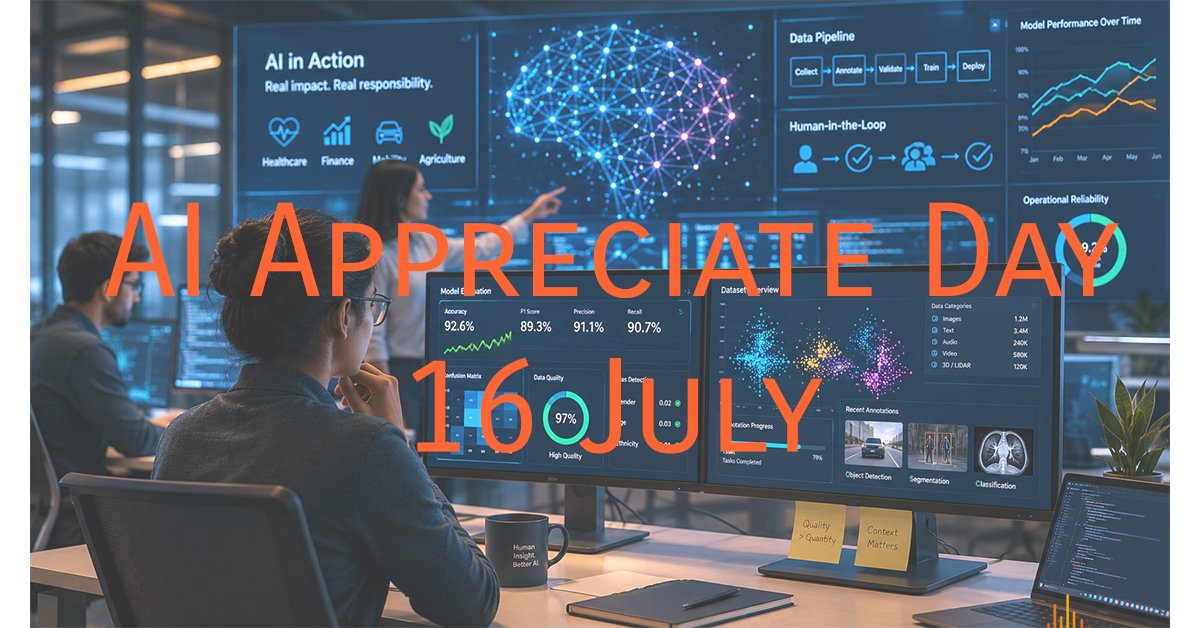
EXL’s pending $310 million acquisition of AI data specialist iMerit signals where enterprise AI investment is actually concentrating: not in bigger models, but in the data pipelines, evaluation frameworks, and human oversight layers that make models usable in production. Announced one day before AI Appreciation Day, the deal anchors a broader industry conversation about what separates AI maturity from AI theater. Voices from SecurityScorecard, HCLTech, Cofense, and others converge on the same diagnosis: the bottleneck has moved from model capability to governance, data quality, and measurable outcomes.
What this means for your business
The organizations struggling most right now aren’t the ones that failed to adopt AI. They’re the ones that adopted it too fast for their operating model to follow. Employees building shadow workflows, vendors quietly enabling AI features inside existing contracts, and threat actors using the same tools to accelerate phishing campaigns, these aren’t edge cases. They’re the default condition for any organization that measured AI progress by the number of pilots launched rather than by whether it actually understands where AI touches its data, its decisions, and its identity infrastructure. If your AI inventory is incomplete, your governance posture is already behind your exposure.
The EXL-iMerit deal is worth reading as a capital-allocation signal, not just a vendor story. When a major business process outsourcing firm pays up to $310 million for a data labeling and model evaluation shop, it’s pricing in the belief that domain-specific, production-ready AI requires human expertise baked into the loop permanently, not as a launch-phase safeguard but as ongoing infrastructure. The target industries, healthcare, financial services, insurance, are exactly where a wrong model output carries regulatory or clinical weight. That’s the frame: high-stakes verticals will pay a premium for evaluation rigor, and that premium is now large enough to drive nine-figure M&A.
The cybersecurity dimension deserves its own budget line. Agentic AI, systems that take autonomous actions on behalf of users or other systems, extends your vendor risk surface in ways that traditional third-party assessments weren’t designed to catch. An agent that can query a supplier’s API, approve a workflow step, or generate a customer-facing message is a new class of access you probably haven’t mapped yet. Meanwhile, AI-generated phishing is already eroding the grammar-and-tone heuristics that most employee security training still relies on. The organizations that come out ahead won’t be the ones with the most AI tools; they’ll be the ones that treated governance and security architecture as preconditions, not post-deployment cleanup.
The leading indicator to watch is whether your organization can answer four questions cleanly: What problem does each deployed AI system solve? What data can it access? What does it cost at scale? Where does a human stay accountable for the output? If those answers require more than a few minutes to produce, the gap between your AI ambition and your AI control environment is probably wider than your board realizes. That’s the budget conversation worth preparing for, not whether to spend more on AI, but whether your current spend is governable.
Concept deep-dive: Human-in-the-loop
Human-in-the-loop describes AI system designs where a person reviews, corrects, or approves outputs at defined points rather than letting the model run fully autonomously. Think of it as a mandatory editorial checkpoint inside an otherwise automated workflow. It exists because AI models fail in ways that are hard to predict in advance, especially on rare or novel inputs. The business connection is accountability: in regulated industries or high-stakes decisions, human-in-the-loop isn’t a quality feature, it’s often a compliance requirement.
Based on reporting from Enterprise AI Leaders Say Trust, Governance and Practical Outcomes Will Define AI’s Next Chapter, originally published 2026-07-16 03:00:00.