
Share with your CDO
Hospital CIOs scaling AI in 2026 are hitting a wall that has nothing to do with model quality. Healthcare AI deployment failures trace back to fragmented records, inconsistent labeling, and data silos across systems that were never built to interoperate. HIMSS CEO Hal Wolf and Aquila Health CEO Dr. Jaime Bland both point to documentation automation and supply chain as the current concentration points for serious deployments, with direct clinical AI held back until governance infrastructure catches up. India’s national health data standardization effort signals how seriously this problem is now being treated at scale.
What this means for your business
The organizations most exposed here aren’t the ones that haven’t started AI pilots. They’re the ones that ran successful pilots and now think they’re ready to scale. A curated pilot dataset masks governance debt the way a demo environment masks integration costs. When full production data feeds into a live system, every labeling inconsistency and cross-system schema mismatch compounds. Health systems that skipped the data readiness audit before signing enterprise AI contracts are about to find out what that shortcut costs in rework, clinician distrust, and stalled rollouts.
The governance failure pattern here is specific and repeatable: compliance and clinical stakeholders get pulled in after a vendor is selected, which means their objections arrive at the worst possible moment, after budget is committed and contracts are signed. That sequencing isn’t accidental negligence; it reflects procurement processes designed around software evaluation, not data system integration. Fixing it requires treating data architecture review as a gate before vendor selection, not a workstream that runs alongside it. Mercy’s phased validation approach, applying human-centered design and iterative clinical testing to a patient engagement tool before broad rollout, is the operational template worth studying here.
The vendor evaluation implication is the one most CDOs will underweight. Model accuracy benchmarks run against a vendor’s reference dataset tell you almost nothing about how the system will perform against your own data. Any vendor unwilling to test against your production environment before contract close is effectively asking you to absorb their model’s unknown sensitivity to your specific governance failures. That’s a risk transfer worth naming explicitly in the next RFP cycle, and the answer to “will you test against our data” is a sharper vendor signal than any published accuracy figure.
Concept deep-dive: Data governance
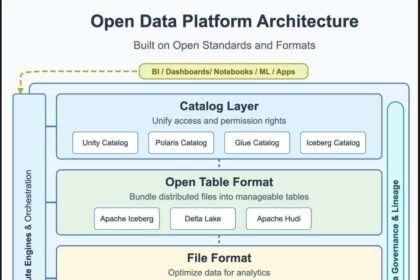
Data governance refers to the policies, standards, and ownership structures that determine how an organization’s data is collected, labeled, stored, and shared across systems. It exists because large organizations accumulate data from dozens of incompatible sources over decades, with no single authority ensuring consistency. Think of it as the difference between a library with a card catalog and one where books are shelved by whoever last touched them. For AI deployments, poor governance means the model trains or operates on inputs that don’t mean the same thing twice.
Based on reporting from Healthcare AI deployments stall on data quality, originally published 2026-07-11 08:39:00.