
Share with your CIO
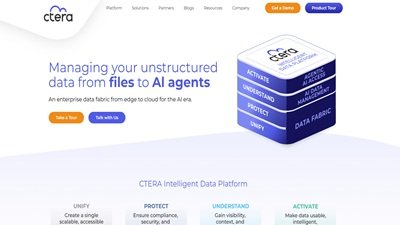
CTERA is betting that enterprises won’t consolidate their file data into Microsoft’s cloud before deploying Copilot, and it’s building infrastructure around that reality. The company’s new integration connects Microsoft 365 Copilot and Teams Copilot to enterprise files stored across edge locations, data centers, and multi-cloud environments, using the open Model Context Protocol to bridge the gap. No data migration required, no changes to existing permissions. CTERA CTO Aron Brand framed it plainly: enterprises get one governed data layer that works across AI ecosystems, including Anthropic’s Claude and Google’s Gemini alongside Copilot.
What this means for your business
The Copilot rollout problem most CIOs won’t admit publicly: the AI is only as useful as the data it can see, and most enterprise file data still lives outside SharePoint and OneDrive. A manufacturing company with years of engineering documents on-prem, or a financial services firm with files distributed across regional edge nodes, gets a dramatically hobbled Copilot out of the box. CTERA is solving the access gap without requiring the migration project that nobody has budget or appetite for right now.
The Model Context Protocol is doing real work here. It’s an open standard, originally introduced by Anthropic, that lets AI models request structured access to external data sources at inference time, rather than requiring everything to be pre-ingested into a single repository. Think of it as an API layer specifically designed so AI assistants can ask “fetch me the relevant files for this query” against systems they don’t own. The business consequence is significant: CTERA’s MCP implementation means the same governed file layer can serve whichever AI platform wins your organization’s next budget cycle, which reduces vendor lock-in risk considerably.
The strategic pattern worth watching is how quickly “permission-aware AI responses” becomes a baseline procurement requirement rather than a differentiator. CTERA is leading with governance precisely because CISOs are blocking Copilot deployments over data exposure fears. Any vendor that can credibly say “users only see what they’re already authorized to see, and nothing moves” is solving the CISO veto problem, not just the CIO capability problem. The signal worth watching: whether Microsoft builds this capability natively into Copilot connectors or acquires its way into the governed file access market.
Concept deep-dive: Model Context Protocol (MCP)
MCP is an open protocol that lets AI models dynamically request data from external systems during a conversation, rather than requiring data to be pre-loaded into the AI’s own storage. It exists because enterprises have data scattered across dozens of systems, and copying everything into an AI repository creates security, compliance, and cost problems. Think of it as a structured query layer: the AI asks, the source system answers, and data never permanently migrates. For CIOs, MCP is what makes “AI that works on your existing data” architecturally plausible without a multi-year consolidation project.
Based on reporting from CTERA Expands Microsoft Copilot Access to Enterprise File Data, originally published 2026-07-29 09:19:00.