
Share with your CTO
Nvidia is in talks to backstop up to $250 billion in debt for OpenAI’s planned 10-gigawatt data center campus in Pike County, Ohio, letting OpenAI borrow against Nvidia’s credit rating rather than its own. The guarantee covers lease and construction costs, not the chip purchases being negotiated separately. The full campus could exceed $500 billion, built on a former uranium-enrichment site developed with SoftBank and the U.S. Department of Energy. Talks are ongoing and terms remain subject to change.
What this means for your business
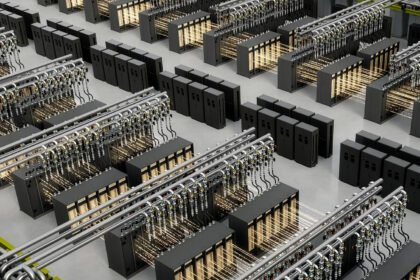
The number that should catch your attention isn’t $250 billion, it’s 10 gigawatts. That’s roughly the sustained power draw of 8 million U.S. homes concentrated into a single campus. CTOs who’ve been watching hyperscaler capex announcements as abstract competition signals need to recalibrate: when one vendor can anchor a half-trillion-dollar build through a supplier’s balance sheet, the infrastructure gap between frontier AI operators and everyone else stops being a matter of degree and starts being a different category of problem entirely.
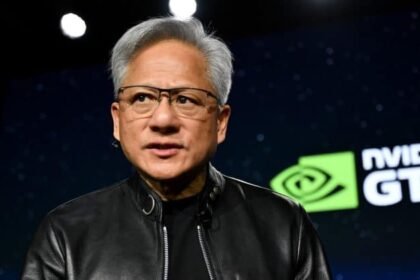
What Nvidia is actually doing here is extending its dominance down the capital stack, not just the chip stack. By backstopping OpenAI’s construction debt, Nvidia converts a customer relationship into a structural dependency, OpenAI’s ability to finance its own existence now runs through Jensen Huang’s credit. CNBC’s framing of this as a simple “partnership” undersells the asymmetry, since a company that controls both the compute your model runs on and the credit that lets you build the facility to run it has pricing leverage that no procurement negotiation can fully offset. CTOs at large enterprises who assume competitive tension between OpenAI and Nvidia provides natural downward pressure on costs should weight that assumption much lower now.
The real second-order pressure lands on cloud infrastructure budgets already committed to AWS, Azure, or Google Cloud. If OpenAI’s dedicated compute at this scale translates into meaningfully lower inference costs or exclusive model capabilities, the “neutral cloud” strategy that many enterprise AI architectures currently depend on becomes harder to defend in the next budget cycle. Watch whether OpenAI’s IPO filing, expected to follow its confidential SEC submission from June, reveals preferential compute pricing tied to this Ohio campus. That single disclosure would be the moment to reopen your vendor concentration assumptions, not after the contracts are signed.
Concept deep-dive: Credit backstop
A credit backstop is a guarantee from a financially stronger party that lets a borrower access debt it couldn’t obtain, or couldn’t obtain cheaply, on its own. Think of it as a co-signer on a mortgage, except the “mortgage” is $250 billion and the co-signer sells the borrower its primary product. The business relevance here is that Nvidia assumes contingent liability in exchange for deepening lock-in, turning a vendor relationship into a financial entanglement that survives any future model competition.
Based on reporting from Nvidia and OpenAI in talks for up to $250 billion dollar AI backstop, originally published 2026-07-27 13:32:00.