
Share with your CIO
Gartner’s 2025 Hype Cycle for Enterprise Architecture draws a hard line: the pilot era is over. Enterprises that spent the last two years testing generative AI chatbots and copilots now face the harder problem of turning those experiments into production systems that are reliable, governed, and scalable. The firm introduces AI engineering as the discipline that bridges that gap, combining DataOps, ModelOps, LLMOps, and AgentOps into a single operational framework. Gartner’s framing of this shift from AI experimentation to AI engineering is the clearest articulation yet of why most enterprise AI investment hasn’t compounded into durable value.
What this means for your business
The recurring failure mode looks like this: a data science team builds a capable proof of concept, hands it to IT for deployment, and it collapses under the weight of production realities. No monitoring, no retraining pipeline, no clear ownership when the model drifts. Gartner is naming that gap explicitly. AI engineering isn’t a new team you hire. It’s a new operating model that forces data scientists, software engineers, security professionals, and business owners into shared accountability for a system that never stops changing.
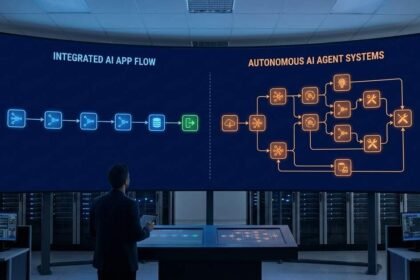
The multiagent angle is where the complexity compounds fast. Agentic systems, AI agents that plan and coordinate tasks with reduced human oversight rather than simply responding to prompts, don’t fail quietly. When one agent in a chain makes a bad decision, downstream agents act on it. Gartner flags this directly: greater autonomy demands stronger governance, not looser governance. The CIOs who treat agent deployment as a software release problem rather than an operational risk problem will learn that distinction the hard way.
The signal worth watching: how quickly your organization can measure the ratio of AI proofs of concept to AI systems actually running in production. That ratio is the real indicator of AI engineering maturity, and it’s the number your board should be asking for instead of headcount of AI projects launched.
Concept deep-dive: LLMOps
LLMOps is the operational practice of deploying, monitoring, and maintaining large language models in production environments. It exists because LLMs behave differently from traditional software: they drift as the world changes, they fail in statistically unpredictable ways, and they require continuous evaluation against real-world outputs. Think of it as DevOps but where the code you’re shipping rewrites its own behavior over time. For a CIO, LLMOps is the difference between an AI feature that works at launch and one that still works six months later when the underlying model has been updated or the input data has shifted.
Based on reporting from Gartner Marks Enterprise Move from AI Experiments to AI Engineering — Campus Technology, originally published 2026-08-05 15:37:00.