
Share with your CISO
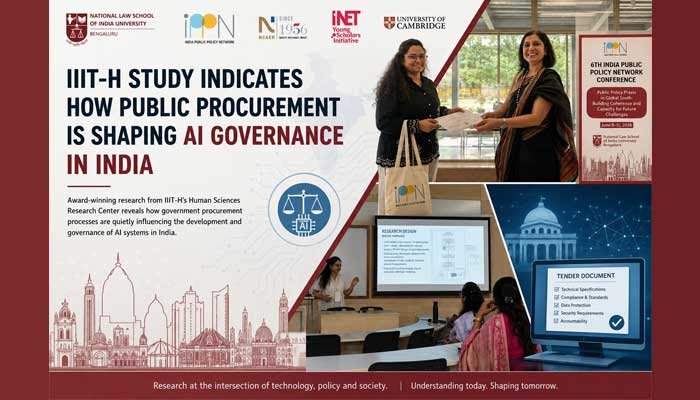
India’s AI governance vacuum is being filled from an unexpected direction, and IIIT Hyderabad’s award-winning procurement study makes the case that government tender documents are doing the regulatory work that no AI Act has done yet. Researchers from IIIT-H’s Human Sciences Research Centre analyzed central and state government AI tenders, finding that technical specifications, eligibility criteria, and contractual obligations inside procurement notices are already encoding governance expectations, compliance standards, and accountability structures for any vendor selling AI into the Indian public sector.
What this means for your business
If your organization sells AI systems to Indian government bodies, or is evaluating Indian public-sector AI vendors as supply chain partners, the compliance surface you need to audit isn’t a single statute. It’s a patchwork of individual tender documents, each one potentially setting different standards for model explainability, data handling, and vendor liability. That’s a harder surface to monitor than a unified regulation, because the requirements aren’t codified in one place and can shift contract by contract without any public announcement.
The deeper finding is what the researchers call governance-by-procurement, where the government delegates AI oversight to the contracting process rather than legislation. This pattern isn’t unique to India; it’s the same dynamic that shaped early cloud security standards in the US through FedRAMP before any binding federal cloud law existed. The risk for enterprise vendors is that procurement-embedded governance tends to be inconsistent, hard to anticipate, and written by procurement officers without deep AI expertise, meaning the compliance burden lands squarely on the vendor to interpret ambiguous technical specifications at bid time.
The signal worth tracking here is whether India eventually codifies its emerging procurement standards into a formal AI Act, or whether it remains a tender-by-tender environment. Vendors with dedicated public-sector AI practices in India should treat this research as an argument for building a procurement intelligence function, someone whose job is reading tenders the way a lawyer reads case law, spotting the governance requirements accumulating quietly inside contract language before they become the de facto standard your competitors are already compliant with.
Based on reporting from IIIT-H Study On AI Procurement Wins Best Paper Award At IPPN Conference 2026, originally published 2026-06-19 03:00:00.