
Share with your CIO
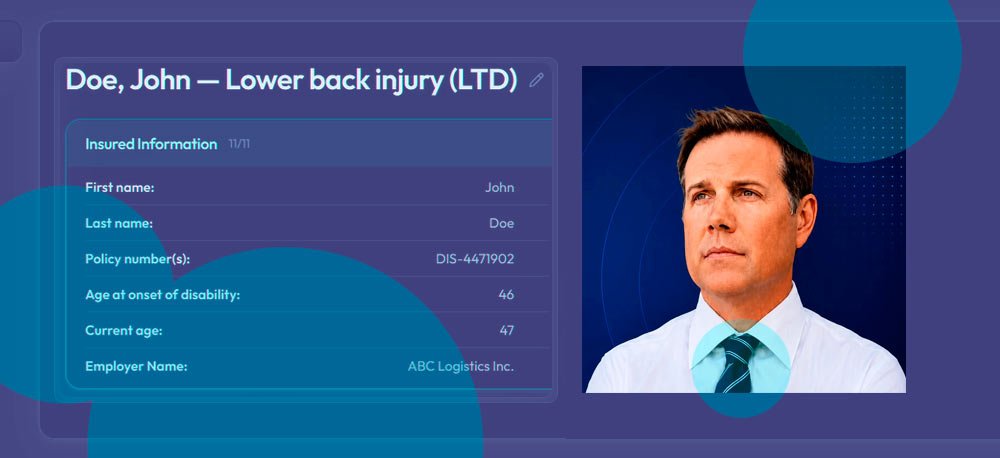
Curant AI is betting that insurance carriers are ready to move beyond AI experiments and commit to operational infrastructure, closing a $3.1 million seed round to build out its claims automation platform. Founded by John Haller, the company positions its product as an intelligence layer sitting on top of existing insurer systems, handling data extraction, workflow routing, and decision support while leaving final claim judgments with human specialists. Humania Insurance is the named early customer, with SVP Luc Thibault citing measurable gains in associate efficiency and consistency.
What this means for your business
The story that matters here isn’t the funding size, it’s the architecture choice Curant AI is forcing onto insurers’ technology roadmaps. Carriers running fragmented legacy claims systems are already doing some version of this manually, patching together workflows across policy administration tools, document repositories, and adjuster desktops. What Curant AI is selling is the proposition that an AI layer on top of that mess is cheaper and faster than replacing the mess itself. If your organization is still debating platform modernization versus point-solution augmentation, this is exactly the trade-off sharpening in the market right now.
The “humans first” positioning isn’t just marketing comfort food for regulators and nervous claims managers. In a line of business where a wrongly denied disability claim carries litigation exposure and state regulatory scrutiny, the liability boundary between AI recommendation and human decision is a genuine architectural requirement, not a soft selling point. Curant AI’s model, where the system surfaces and routes but never decides, maps directly onto how regulated industries need AI deployed to satisfy audit trails and compliance documentation. That design constraint is the real product, and it’s what separates a claims AI tool from a general-purpose workflow bot dressed up in insurance language.
The falsification condition here is straightforward. If Curant AI’s customer list in 18 months is still anchored to one mid-tier Canadian insurer, the “intelligence layer” framing will look like a wedge that didn’t widen. The vendors that win this category won’t be the ones with the best AI, they’ll be the ones with the deepest integrations into the policy administration systems the top 20 carriers actually run. That’s where the CIO’s evaluation should focus: not the demo, but the connector library.
Concept deep-dive: Agentic AI
Agentic AI refers to systems that don’t just answer questions but take sequences of actions autonomously to complete a task, think of a digital worker that reads a document, pulls relevant policy data, routes the file to the right queue, and flags an anomaly, all without a human triggering each step. The business relevance is that agentic systems can compress multi-step manual workflows into seconds, but they also introduce new questions about where accountability sits when an automated action turns out to be wrong.
Based on reporting from Curant AI raises $3.1 mn in seed funding as insurers seek enterprise AI tools for claims automation, originally published 2026-08-04 07:47:00.