
Share with your CTO
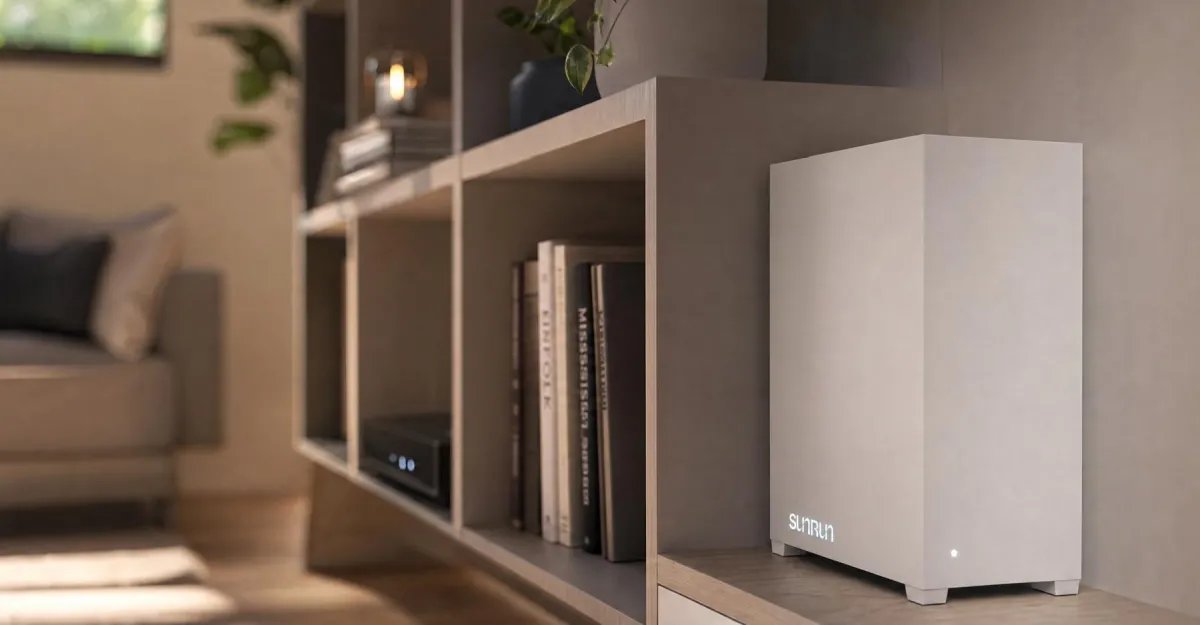
Sunrun is betting that distributed home compute nodes can absorb AI infrastructure demand that centralized data centers increasingly can’t meet, politically or physically. The solar and battery storage company is launching a pilot program that places compute units inside the homes of its 1.1 million solar customers, then sells that pooled processing capacity to enterprise AI buyers. Customers get compensated for hosting. Sunrun gets a new revenue stream. The timing isn’t accidental: over 70 percent of Americans now oppose new data centers in their communities.
What this means for your business
If your infrastructure roadmap assumes GPU capacity keeps expanding through conventional hyperscale builds, this story is a flag worth reading carefully. The political ceiling on centralized data center construction is real and tightening, and Sunrun’s model is an early signal that AI compute procurement may fracture into a patchwork of unconventional supply sources. CTOs evaluating cloud commitments or colocation contracts over the next 18 months are now operating in a market where the supply side is actively experimenting with architectures that didn’t exist two years ago.
The harder question for enterprise buyers isn’t whether Sunrun’s pilot succeeds. It’s whether distributed edge compute, units scattered across residential rooftops rather than concentrated in purpose-built facilities, can meet the latency, reliability, and security standards that enterprise AI workloads require. Batch inference and training jobs tolerate variance. Real-time agentic pipelines and customer-facing model serving generally don’t. Sunrun hasn’t published specs on uptime guarantees, redundancy architecture, or how compute nodes handle a homeowner who simply unplugs for a renovation.
The model that actually wins here is probably narrow: workloads that are latency-tolerant, parallelizable, and not subject to strict data residency rules. If Sunrun can carve out that slice cheaply enough, it puts price pressure on the lower tiers of cloud inference pricing, which is worth watching if your team is currently absorbing high per-token costs on non-latency-sensitive jobs. I’d revise that view if Sunrun publishes pilot results showing enterprise-grade SLA compliance at scale, but until then, treat this as a cost signal to track, not a procurement path to open.
Concept deep-dive: Distributed edge compute
Distributed edge compute pushes processing out of central data centers and into smaller nodes closer to where data originates, homes, vehicles, or local facilities. Think of it as the difference between one large power plant and thousands of solar panels: each unit is modest, but aggregated capacity adds up. For AI, the business case rests on reducing data center land and power constraints, though the tradeoff is that coordinating thousands of small, heterogeneous nodes reliably is an unsolved engineering problem at commercial scale.
Based on reporting from Would you host part of an AI data center in your home?, originally published 2026-07-10 09:20:00.