
Share with your CTO
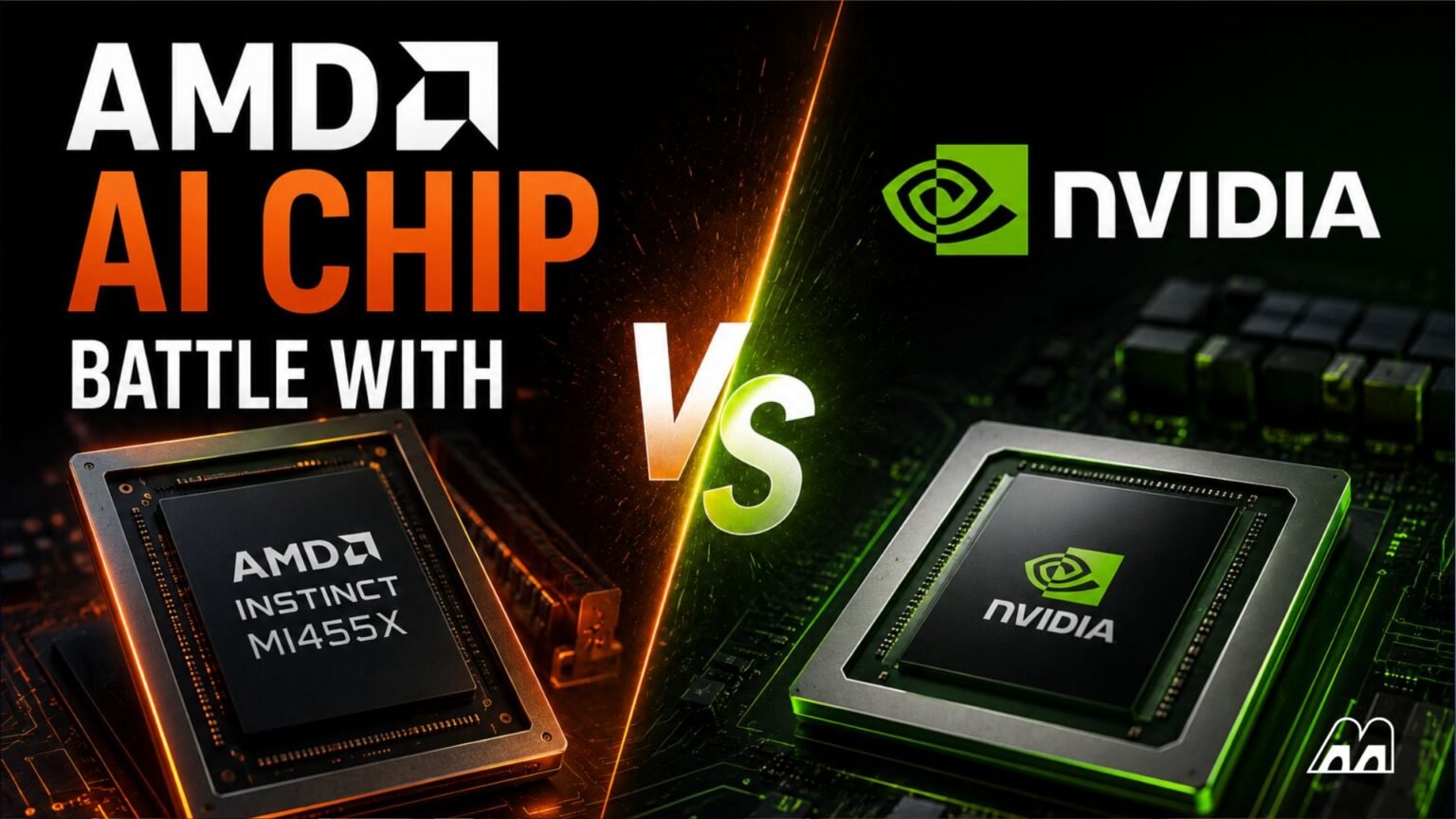
AMD is betting that AI infrastructure buyers will stop evaluating chips in isolation and start evaluating systems, and it showed up to make that case with the Helios rack-scale platform at Advancing AI 2026. Helios combines 72 MI455X GPUs, 18 EPYC Venice CPUs, and Pensando networking into a single integrated unit, with shipments starting late Q3 2026. OpenAI, Meta, and Anthropic have committed a combined 14 gigawatts of deployment capacity, and AMD is investing up to $5 billion in Anthropic to make the relationship stick.
What this means for your business
Your current Nvidia exposure is probably larger than it looks on a hardware budget line. CUDA isn’t just a software stack, it’s accumulated institutional knowledge: your ML engineers optimize for it, your cloud provider prices around it, your deployment tooling assumes it. The organizations most insulated from AMD’s pitch are those whose Nvidia dependency runs deep enough to make switching costs real, not theoretical. Organizations most exposed to opportunity are those buying net-new inference capacity at scale in 2027 and beyond, before any single architecture has fully locked the workload.
The Anthropic engineering collaboration is the more interesting signal here, and it’s worth separating from the headline gigawatt numbers. AMD is effectively paying a frontier AI lab to find ROCm’s gaps in production. That’s a smarter investment than marketing spend, because every bottleneck Anthropic surfaces and AMD fixes becomes a lower barrier for the next customer who doesn’t have a team of engineers to do the optimization themselves. ROCm’s historical weakness wasn’t raw performance on benchmarks, it was friction at the integration layer, and that’s exactly what production workloads stress-test. If AMD closes that gap with Anthropic’s help, the addressable market expands well beyond hyperscalers with dedicated hardware teams.
AMD’s claimed 30% tokens-per-dollar advantage deserves scrutiny before it influences a budget decision. Vendor benchmarks are optimization targets, not deployment guarantees, and the gap between a benchmark workload and your actual inference pattern can swallow a cost advantage entirely. The right frame isn’t “should we switch to AMD” but “at what scale and workload profile does an AMD infrastructure lane become worth qualifying.” If OpenAI’s Q4 2026 deployments ship on schedule and performance data surfaces publicly, that’s the moment the calculus changes. I’d revisit this position entirely if AMD’s first independent production benchmarks land within 10% of Nvidia’s FP4 throughput while matching the memory advantage, because that combination removes the last credible reason to stay single-vendor on new capacity.
Concept deep-dive: Rack-scale integration
Traditional AI infrastructure procurement meant buying GPUs from one vendor, CPUs from another, and networking from a third, then integrating them yourself. Rack-scale design bundles all three into a pre-validated unit, the way a commercial kitchen differs from buying individual appliances. The business consequence is that performance guarantees, support contracts, and optimization responsibility shift toward the vendor. That simplifies procurement but concentrates supplier risk, which is precisely why AMD’s customer commitments matter as much as the hardware specs.
Based on reporting from AMD AI Chip Challenge Turns the Nvidia Rivalry Into a System War, originally published 2026-07-25 22:53:00.