
Share with your CTO
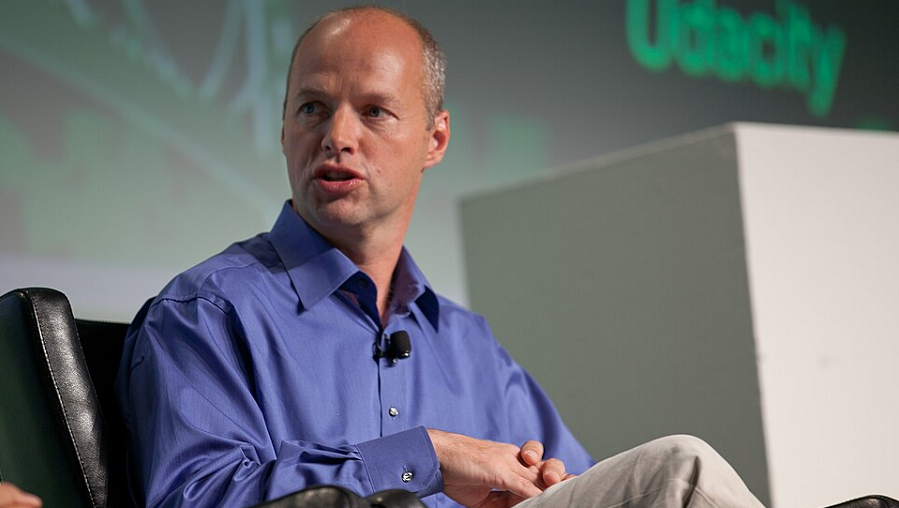
Sebastian Thrun and Adrian Aoun are building Dulo, an AI startup targeting hardware design and robotics engineering, and just closed $130 million to do it. The backer list reads like a who’s-who of early Google: Eric Schmidt, Ram Shriram, Marc Benioff, and John Doerr all participated. Dulo’s stated mission is foundation models optimized for hardware design tasks, with robotics and autonomous vehicle development likely in scope. The company faces a $12 billion-funded rival in Prometheus, the engineering AI startup co-led by Jeff Bezos.
What this means for your business
The engineering simulation market is quietly becoming one of the most contested AI battlegrounds of 2026. When Dulo talks about “manufacturing at lightspeed,” the concrete target is the pre-production validation cycle: the weeks or months your hardware partners spend running simulations to catch design flaws before a single component gets fabricated. Compressing that cycle by even 30 percent reshapes product timelines across aerospace, automotive, and industrial robotics supply chains your company likely touches.
The pedigree-capital convergence here is a genuine signal, not noise. Thrun built Stanley, the self-driving vehicle that seeded what became Waymo. Aoun sold an NLP startup to Google in 2013. When founders with that specific background raise this fast against a $12 billion competitor, the underlying thesis has probably already been validated with at least one anchor customer or pilot. The recurring pattern in deep-tech AI rounds is that the capital chases a proof point that isn’t public yet, not a PowerPoint.
The question worth holding: whether Dulo’s foundation model approach, training generalist models on hardware design tasks, beats the domain-specific simulation tools like Vinci4D’s meshing automation or PhysicsX’s PDE acceleration. General models have won this argument in software. Hardware physics is messier, more constrained by real-world tolerances, and historically resistant to generalization. I’d revise this view if Dulo publishes benchmark results showing their models generalize across material classes and geometric complexity without fine-tuning.
Concept deep-dive: Physics-informed engineering simulation
Engineering simulation uses partial differential equations (mathematical relationships describing how physical forces change across space and time) to predict how a product behaves before it’s built. Think of it as a stress test run entirely in software: will this robot arm joint hold under load? Will this heat sink dissipate enough energy? Traditional solvers are computationally expensive and slow. AI-accelerated simulation replaces or supplements the solver with a neural network trained on prior simulation outputs, cutting compute time from hours to minutes. The business implication is faster design iteration cycles and lower prototype costs across any hardware-dependent product line.
Based on reporting from Google X co-founder Sebastian Thrun raises $130M for AI engineering startup Dulo, originally published 2026-10-30 19:59:00.