
Share with your CDO
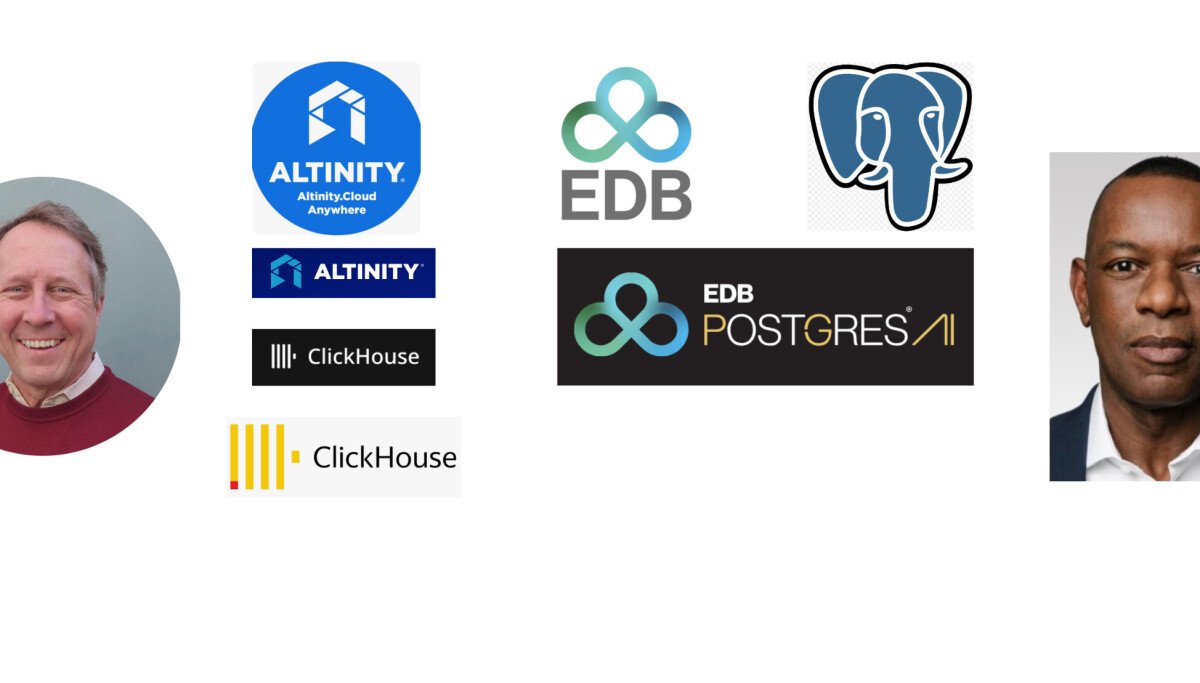
EnterpriseDB (EDB) is betting that the next data architecture battleground is not cloud versus on-premises but transactional versus analytical, and it is buying ClickHouse specialist Altinity to close that gap. Altinity, founded in 2017 and the second-largest independent contributor to the ClickHouse open-source project, brings enterprise ClickHouse software, managed cloud services, and customers including The Trade Desk and ZoomInfo. EDB plans to ship integrated enterprise ClickHouse capabilities in Q4 2026, with a shared Apache Iceberg catalog across Postgres and ClickHouse as the technical centerpiece.
What this means for your business
The organizations most directly affected here are those running Postgres for operational workloads who have separately bolted on a real-time analytics layer, whether ClickHouse, Redshift, or something else, and are absorbing the integration cost every day. If your data stack already looks like this, EDB just became a credible single-vendor answer to a problem you are currently solving with two or three vendors and a team of engineers. If you are locked into a cloud-native analytics stack like Snowflake or Databricks, this move is less about you and more about whether the open-source sovereign path ever catches up.
The analytical ambition here is real, but the execution risk is also real. EDB’s prior attempts to close the OLAP gap, the Postgres Analytics Accelerator and the WarehousePG fork of Greenplum, were not enough, which is precisely why this acquisition exists. Combining two open-source communities under a private-equity-backed commercial entity creates genuine tension: contributors want permissive governance, and PE-backed companies need durable monetization. Altinity’s value is partly its credibility inside the ClickHouse ecosystem, and that credibility is not automatically transferred by an acquisition announcement. The Q4 2026 integration timeline is aggressive for two distinct SQL engines with different storage models, query planners, and operational surfaces.
The IDC framing about agentic AI collapsing the wall between transactional and analytical systems is correct directionally, though IDC has an incentive to frame every infrastructure shift as urgent enough to warrant advisory spend. The underlying dynamic is real regardless: AI agents that need to read a customer record, aggregate behavioral history, and act in a single workflow cannot afford the latency of moving data between siloed systems first. EDB is building toward that architecture. Whether Postgres plus ClickHouse under one vendor roof is actually easier to operate than best-of-breed alternatives depends entirely on how well the shared Iceberg catalog and unified access controls actually ship, which is the only metric worth tracking when Q4 2026 arrives.
Concept deep-dive: OLTP plus OLAP convergence
OLTP (online transaction processing) systems, like Postgres, are built to handle fast, individual writes and reads, recording each order, payment, or login reliably. OLAP (online analytical processing) systems, like ClickHouse, are built to scan billions of rows and return aggregated results in milliseconds. They use fundamentally different storage layouts. Combining them in one platform matters because AI workflows increasingly need both simultaneously, and every hand-off between separate systems adds latency, cost, and synchronization risk.
Based on reporting from EDB buying Altinity to integrate PostgreSQL with ClickHouse, originally published 2026-11-06 08:43:00.