
Share with your CIO
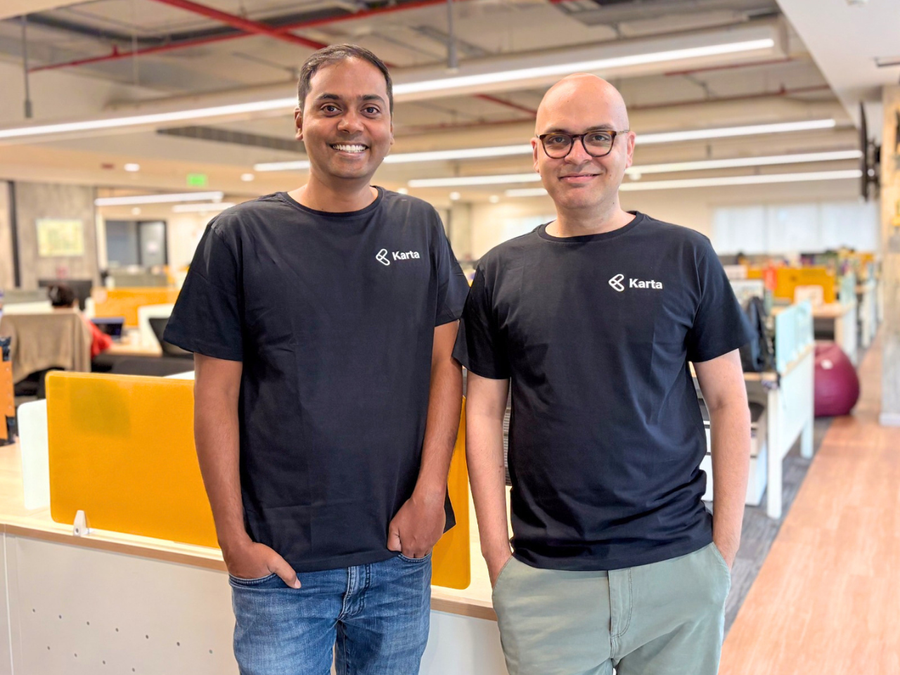
Karta AI is betting that the real money in contact center automation isn’t FAQ deflection but the complex, multi-system calls that consume 80% of customer service costs in financial services. The Bengaluru startup, founded by two former Razorpay executives, raised $3 million in seed funding from PeerCapital, Cedar Hill Capital, and three co-investors to pursue that thesis. It has 10 to 12 paying customers including PhonePe and Bajaj, and handles voice across what the industry calls level 2 and level 3 queries, where a single call touches multiple enterprise systems at once.
What this means for your business
If your organization runs a contact center for financial services, the cost argument here is worth taking seriously before dismissing it as a seed-stage story. Karta AI’s claim that level 1 queries represent only 10% of contact center costs despite being 30 to 40% of call volume is the kind of unit economics insight that exposes a specific failure mode in most IVR and chatbot deployments: companies automate the cheap calls and leave the expensive ones to humans, then wonder why automation ROI is thin.
The technical architecture Karta is describing, what they call a predictive context engine that holds intent across a single call and pulls from multiple backend systems simultaneously, is less exotic than it sounds. It’s essentially a stateful orchestration layer sitting above whatever large language models the platform calls (OpenAI, Gemini, Kimi, Gemma in Karta’s case). The harder problem isn’t the AI, it’s the integration depth required to connect that layer to a lender’s loan management system, insurance policy database, and payment rails in real time. That’s where incumbents like Genesys and NICE have a surface-area advantage, and where a two-year-old startup’s honest differentiator is specialization and speed, not moat. The Indian BFSI market is crowded here, with Navana, Rezolv, and Gnani all working similar ground, which is a signal that enterprise buyers are genuinely pulling on the problem rather than being pushed into it.
The vendor you should watch isn’t Karta specifically. It’s whichever of these competitors lands a disclosed enterprise contract with measurable cost-per-resolved-call data attached. That disclosure, when it comes, will be the moment this category stops being a roadmap conversation and becomes a budget conversation. If your contact center vendor renewal is inside 18 months, the right question to bring into that negotiation isn’t “does your platform support AI” but “what percentage of level 2 and level 3 call volume can you automate today, and what’s your actual cost comparison to a blended human agent rate.”
Based on reporting from Voice AI startup Karta AI raises $3 million in seed funding led by PeerCapital and Cedar Hill, originally published 2026-10-22 10:24:00.