
Share with your CTO
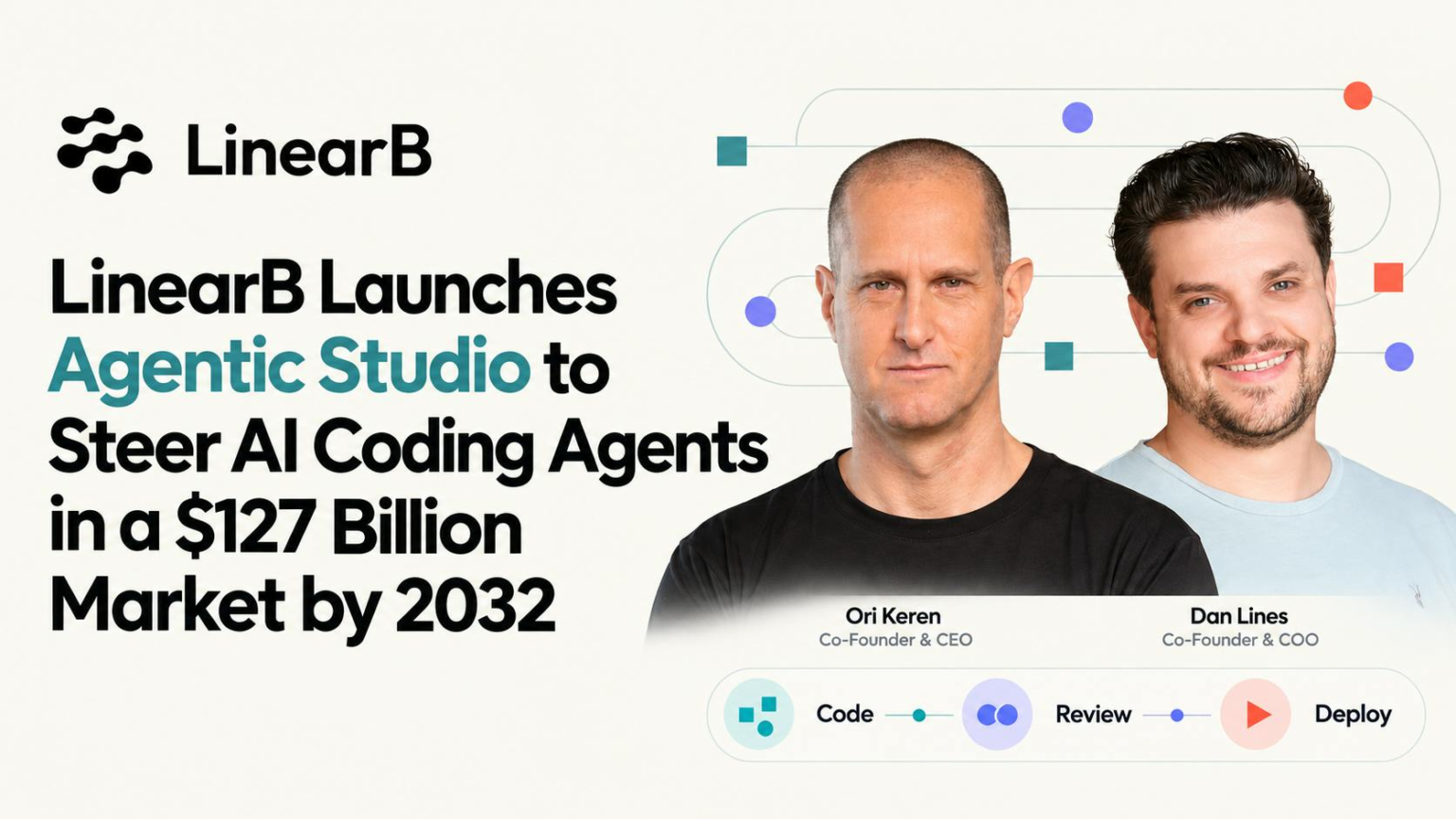
LinearB is betting that the bottleneck in AI-assisted engineering has moved from code generation to code delivery. The company launched Agentic Studio, a platform that feeds coding agents historical context from GitHub, Jira, and incident data via an MCP server, so agents know whose code they’re touching and how carefully to work before they open a change. The first capability, called the effort skill, throttles token consumption based on change risk. LinearB’s benchmark data across 8.1 million pull requests shows why this matters: agent-authored changes wait 5.2 times longer for review than human changes, and only 79% merge within 30 days even at elite organizations, against 92% for human-written code.
What this means for your business
The data exposes a dynamic that’s easy to miss when you’re watching developer output numbers climb. Heavy AI users merged 95.7% more pull requests per week year-over-year, which looks like a win until you see that the same organizations spent 9.6 times more on AI tokens to get roughly double the output. That’s not a productivity story. That’s a cost structure problem wearing a productivity story’s clothes. If your engineering team is in the top spending decile, developers are burning $35.20 per coding day in tokens, which projects to nearly $5,800 per developer annually.
The elite-versus-fair gap on AI code review is the sharpest signal in LinearB’s data. Elite organizations run AI pre-review on 57% of pull requests. Fair organizations run it on 8%. That sevenfold difference in one specific practice, not model choice or agent sophistication, explains most of the acceptance rate gap. The implication is that the organizations losing ground on agentic AI aren’t losing because of the agents. They’re losing because their review pipeline was already weak, and agents amplify existing bottlenecks rather than bypass them.
The question worth holding: Gartner projects that AI coding tool spend will exceed the average developer salary by 2028. That creates a forcing function for the CTO that hasn’t existed before. You’ll need a unit economics answer, cost per delivered change rather than cost per developer, before your CFO asks for one. LinearB’s worked example (not customer data, to be fair) shows a 29% reduction in cost per merged change when token spend quadruples alongside a 72% output increase. That math only works if the code actually ships. Right now, at most organizations, a lot of it doesn’t.
Concept deep-dive: MCP server
An MCP server, or Model Context Protocol server, is a standardized interface that lets AI agents query external data sources during a task, rather than operating only on what fits in their context window. Think of it as an API designed specifically for agents to pull structured, real-time context mid-workflow. LinearB uses it so a coding agent can ask, before touching a file, who owns this code, how volatile it is, and whether it caused recent incidents. Without that grounding, agents work blind. The business consequence is low merge rates and wasted token spend on changes that reviewers reject or ignore.
Based on reporting from LinearB Launches Agentic Studio to Steer AI Coding Agents in a $127 Billion Market by 2032, originally published 2026-11-02 09:36:00.