


Share with your COO
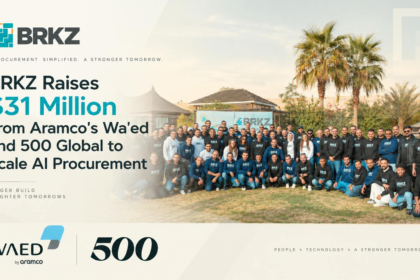
BRKZ is betting that Saudi Arabia’s construction boom is too big and too fragmented to stay manual, and $31 million in fresh capital is how it plans to prove it. The Riyadh-based building materials procurement platform closed a $13 million Series B equity round alongside $18 million in growth debt, backed by Wa’ed Ventures (Aramco’s VC arm) and 500 Global. Revenue grew 2.5x in 2025 and is projected to triple in 2026, with more than $133 million in materials sold and $1.37 billion in quote requests processed to date.
What this means for your business
The story here isn’t really about BRKZ winning a funding round. It’s about what happens when a sector that runs on phone calls, fax-adjacent price negotiations, and informal supplier relationships finally gets a purpose-built data layer dropped on top of it. Companies operating regional construction supply chains, or procuring materials at scale across the Gulf, are now facing a counterparty that has 38 million structured pricing data points and two years of head start. The question is whether your procurement function is building comparable intelligence, or whether you’re about to be the least-informed party in every negotiation.
BRKZ’s pricing engine is worth examining closely, not because the 84-89% accuracy claim is independently verified, but because the underlying architecture is the right one. A model trained on 40,000 real quote requests, covering 13,000 product records and 2,100 supplier profiles, is the kind of proprietary dataset that can’t be replicated by a competitor showing up next year with more compute. The moat isn’t the model, it’s the transactional history. Every completed order makes the next prediction tighter. That’s a compounding advantage, and it’s the same dynamic that made Coupa and Ariba sticky in enterprise procurement before the AI wave arrived, except BRKZ is building it into a market that those platforms never meaningfully penetrated.
The Nusa delivery agent, which reads WhatsApp photos of delivery notes and closes completed orders without human intervention about 75% of the time, is a sharper signal than the pricing engine for near-term operational impact. Automating goods receipt confirmation, the step where materials are logged as delivered and payment terms begin, is exactly where construction project cash flow gets held up. If a competitor or your existing procurement software isn’t doing this yet, that gap is now a measurable cost. The budget question to revisit isn’t whether to fund AI in procurement generally; it’s whether your current vendor contract is locking you into a pre-automation cost structure for another renewal cycle.
Based on reporting from BRKZ raises USD $31m to expand AI procurement platform, originally published 2026-09-14 09:20:00.