

Share with your CTO
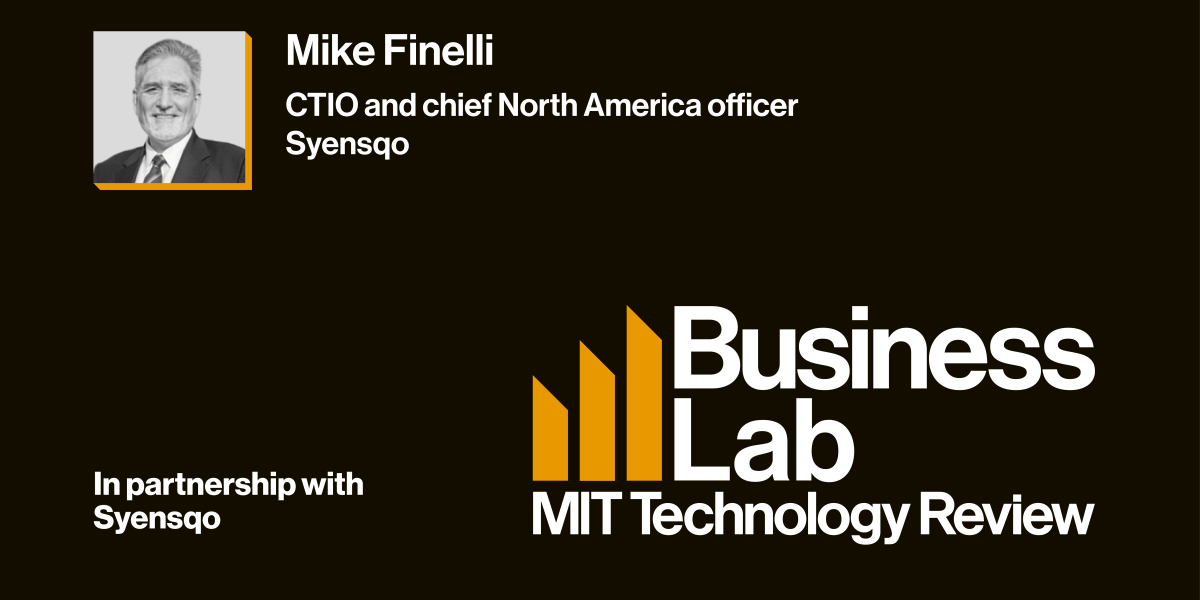
Syensqo is making a direct claim that specialty materials, not compute or software, are becoming the binding constraint on AI infrastructure scaling. In a conversation with MIT Technology Review, Syensqo’s Mike outlines how AI’s compounding performance demands, higher temperatures, greater purity, plasma resistance, and long-term chemical stability, are pushing semiconductor fabs and next-generation data centers past what commodity materials can handle. The company is drawing directly on work it did for electric vehicle powertrains to solve the same thermal and electrical challenges now appearing in high-voltage data center architectures.
What this means for your business
The organizations most exposed here are those planning major data center builds or chip fab partnerships over the next three to five years. If your infrastructure roadmap assumes that compute density can keep climbing purely as a function of chip design and power delivery, this conversation is a useful correction. The materials stack, specifically the seals, polymers, and dielectric fluids that keep extreme environments contained and stable, is increasingly a gating factor on what the next chip generation can actually achieve at production scale.
Syensqo’s “and, and, and” framing, where each added performance requirement narrows the viable materials set dramatically, is a clean way to think about supply chain fragility in AI infrastructure. Commodity suppliers can satisfy one or two requirements. Satisfying six simultaneously is a different market with far fewer players. That concentration matters for procurement and vendor risk teams who are currently stress-testing their semiconductor supply chains but may not be applying the same scrutiny to the specialty materials tier one level below. A fab going offline because a seal compound is unavailable or out of spec is a real failure mode, and it doesn’t show up in most enterprise AI risk registers yet.
The EV-to-data-center technology transfer Syensqo describes is worth watching as a signal of where capability actually accumulates in hardware supply chains. Companies that developed materials for 800-volt EV architectures are now the ones best positioned to supply high-voltage data center infrastructure, because the physics of managing heat and electrical stress at density are genuinely similar. If that pattern holds, the vendors who win the AI infrastructure materials market won’t be new entrants built around AI, they’ll be industrial incumbents who happened to solve the right physics problem first in a different industry. That’s a different vendor evaluation conversation than most infrastructure teams are currently having.
Based on reporting from Building the materials foundation for AI, originally published 2026-09-16 08:47:00.