


Share with your CISO
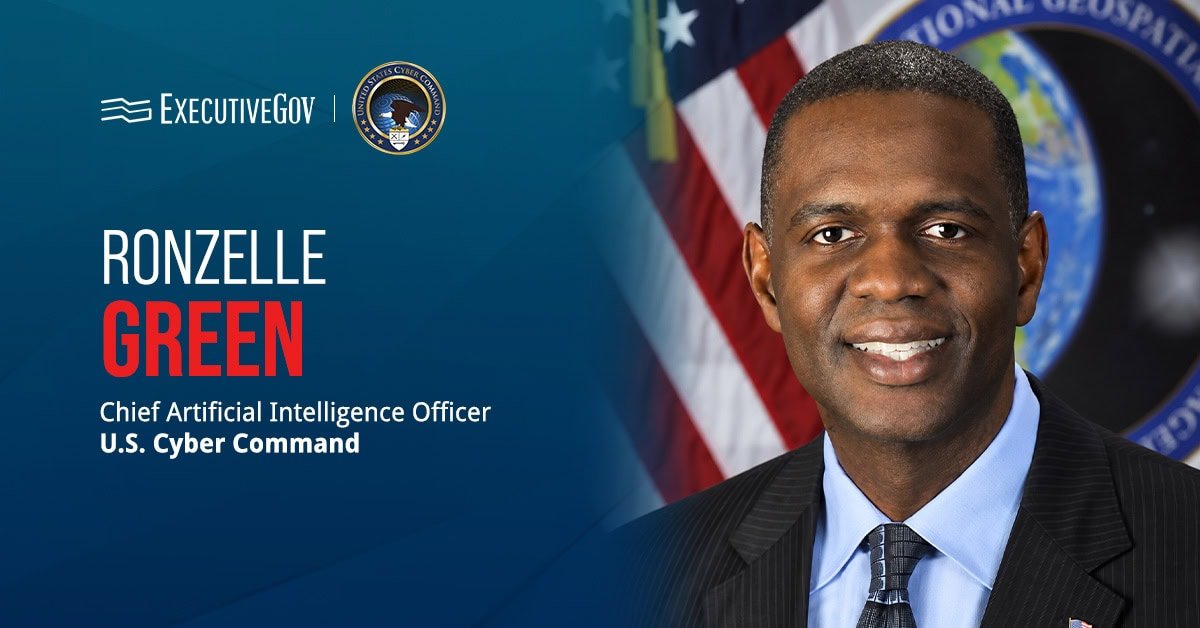
U.S. Cyber Command is betting that geospatial intelligence expertise translates directly into cyber operations leadership, appointing Ronzelle Green as its chief AI officer to succeed the role’s inaugural holder, Brig. Gen. Reid Novotny. Green arrives from NGA’s R&D directorate and previously scaled DCSA’s technology infrastructure from 900 to 12,000 employees, a credential that signals operational execution at pace. The position, created only in 2025, is tasked with embedding AI across cyber operations, accelerating decision cycles, and brokering partnerships with private industry and academia.
What this means for your business
The appointment matters most to enterprise security leaders whose organizations already sell into, or are actively pursuing, defense and intelligence contracts. Green’s background sits at the intersection of R&D pipeline management and large-scale IT integration, which means USCYBERCOM’s AI priorities are likely to tilt toward fielding speed and interoperability rather than basic research. Companies positioned as defense AI vendors should read this as a signal about what procurement conversations will emphasize: demonstrated deployment capability, not prototype elegance.
Green’s NGA tenure is the detail worth sitting with. Geospatial intelligence work is fundamentally about fusing heterogeneous data streams into actionable targeting, a pattern that maps cleanly onto the network threat-detection problem that cyber operations face. His appointment suggests USCYBERCOM is less interested in AI as a conceptual layer and more interested in AI that closes the loop between signal and decision. For private-sector partners, that means the relevant capability to demonstrate isn’t model sophistication; it’s integration speed and latency under operational conditions.
The CAIO role itself is only months old, and Green is already its second occupant. That turnover rate, even if the first holder moved for ordinary career reasons, reflects how quickly the Pentagon is trying to iterate on a function it didn’t formally define until 2025. Enterprise security vendors who treat government AI partnerships as slow-moving procurement cycles should reconsider that assumption. The organizations calibrating for a five-year sales cycle are already behind the decision rhythm this appointment represents.
Based on reporting from Ronzelle Green Named US Cyber Command Chief AI Officer, originally published 2026-09-16 17:06:00.